Introduction: The Business World Is Changing
Businesses today are facing increasing competition, changing customer expectations, and the need to operate faster than ever before.
Traditional manual processes consume valuable time and create unnecessary delays. From answering customer questions to managing leads and handling repetitive tasks, businesses spend many hours on work that can now be automated.
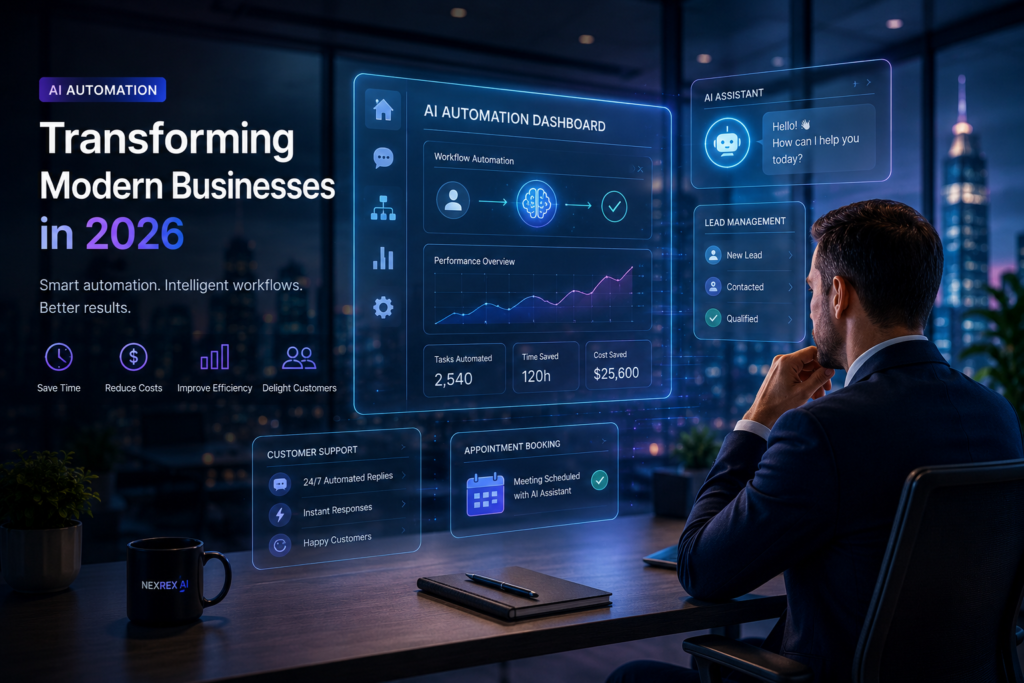
AI automation is changing the way companies operate. By combining artificial intelligence with smart workflows, businesses can improve efficiency, reduce operational costs, and deliver better customer experiences.
What Is AI Automation?
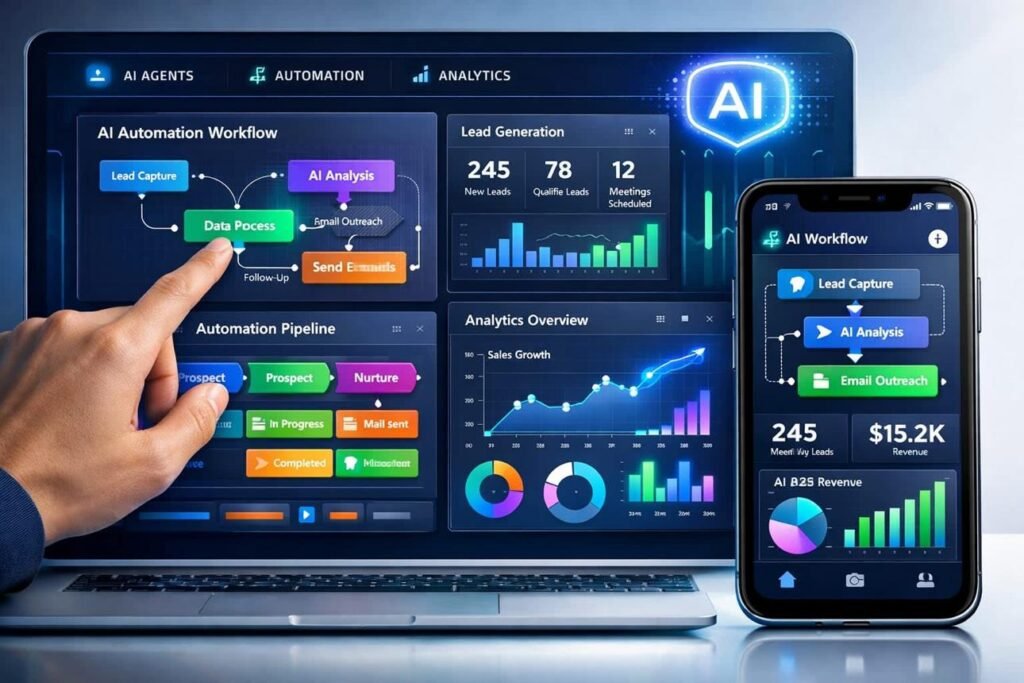
AI automation is the combination of artificial intelligence and automated workflows that allows businesses to complete tasks with minimal human effort.
Unlike traditional automation, which follows fixed rules, AI-powered systems can understand customer questions, analyze information, make recommendations, and improve responses based on available data.
For example, a normal automation may send the same message to every customer. An AI-powered automation can understand the customer’s question, identify what they need, and provide a more relevant response.
Businesses can use AI automation for customer support, appointment booking, lead management, sales follow-ups, reporting, data entry, inventory updates, and many other daily operations.
Why Businesses Need AI Automation in 2026
In 2026, customers expect fast responses, personalized communication, and easy access to services. Businesses that rely only on manual processes often struggle to meet these expectations.
A customer may contact a business through WhatsApp, email, website forms, or social media. If the response is delayed, the customer may choose a competitor. AI automation helps businesses respond instantly, even outside normal working hours.
It also helps companies reduce repetitive work. Employees no longer need to manually copy information between different systems, send the same follow-up messages, or update records one by one.
By automating these tasks, businesses can improve speed, reduce errors, and allow their teams to focus on more important work such as customer relationships, strategy, and growth.
Key Benefits of AI Automation
- Saves Time
AI automation completes repetitive tasks quickly and consistently. Businesses can automate customer replies, reminders, data entry, reports, and follow-up messages.
- Reduces Operational Costs
Automation reduces the amount of manual work required for daily operations. This helps businesses use their team more effectively and avoid unnecessary administrative costs.
- Improves Customer Experience
Customers receive faster responses, accurate information, and better support. AI assistants can provide help 24 hours a day.
- Reduces Human Errors
Manual data entry and repetitive processes can create mistakes. Automated systems follow the correct workflow and improve accuracy.
- Increases Productivity
Teams can spend less time on routine work and focus on sales, customer service, planning, and business development.
- Helps Businesses Scale
As the number of customers increases, AI systems can handle more inquiries and tasks without requiring the same increase in staff.
Real Business Applications of AI Automation

AI automation is useful in almost every industry because most businesses have repetitive tasks, customer inquiries, follow-ups, scheduling, reporting, and data-management needs.
The most successful automation systems are not created only to look advanced. They are designed to solve a specific business problem, reduce unnecessary work, and improve the customer journey.
Below are some practical ways businesses are already using AI automation.
Healthcare Clinics
Clinics can use AI automation to answer common patient questions, share service information, book appointments, send confirmations, remind patients before visits, and request reviews after treatment.
For example, a dental clinic can use a WhatsApp AI receptionist to answer questions about consultation fees, available treatments, clinic timings, and appointment slots without requiring the receptionist to type the same answers repeatedly.
Retail and E-commerce
Retail stores and e-commerce businesses can automate order confirmations, delivery updates, customer support, abandoned-cart follow-ups, stock alerts, and product inquiries.
AI systems can also help staff organize customer data, identify popular products, and generate reports for better decision-making.
Real Estate
Real estate businesses receive inquiries from many potential buyers and tenants. AI automation can collect requirements, qualify leads, share relevant property information, schedule viewings, and send follow-up messages automatically.
This helps agents focus on serious prospects instead of manually responding to every basic inquiry.
Salons and Aesthetic Clinics
Salons and aesthetic clinics can automate service inquiries, appointment booking, treatment reminders, promotional messages, and follow-ups with previous customers.
An automated system can also send preparation instructions before an appointment and aftercare guidance once the service is completed.
Professional Services
Consultants, agencies, accountants, lawyers, and other professional-service businesses can use AI automation for lead qualification, consultation booking, client onboarding, document collection, email follow-ups, and task management.
This creates a more organized process and gives clients a faster, more professional experience.
How AI Automation Works
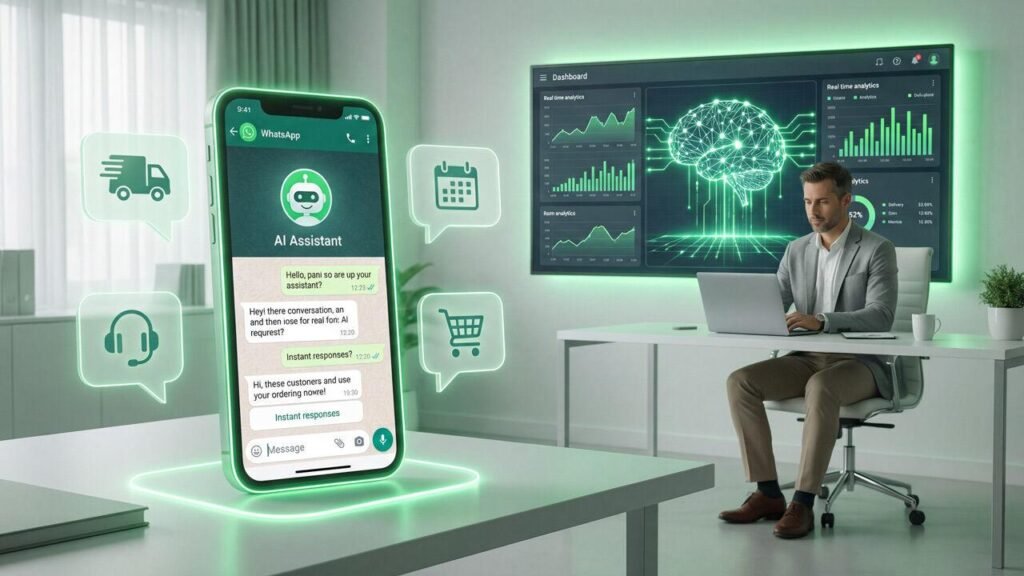
A complete AI automation system usually connects several tools and follows a defined workflow.
The process may begin when a customer submits a website form, sends a WhatsApp message, replies to an email, or books an appointment. The automation then reads the information, decides what should happen next, updates the relevant system, and sends the correct response.
For example, when a patient requests an appointment, the system can collect the required details, check available time slots, create the appointment in Google Calendar, update the clinic’s records, and send a confirmation message automatically.
- A customer starts an action
- This may be a message, website form, booking request, order, or email.
- The system collects the information
- The automation captures the customer’s name, contact details, requirements, and other relevant data.
- AI understands or processes the request
- The AI system identifies the customer’s intent, prepares a reply, summarizes information, or decides which workflow should run.
- Connected tools complete the task
- The system may update a CRM, Google Sheet, calendar, website, email platform, or internal dashboard.
- The customer receives a response
- A confirmation, reminder, answer, report, or follow-up message is sent automatically.
- The business tracks the result
- The team can review leads, appointments, orders, conversations, and performance from the relevant system.
Common Tools Used in AI Automation
The exact technology depends on the business and project requirements. A strong automation system may combine several tools rather than relying on a single platform.
- OpenAI or other language models for intelligent replies and content processing
- n8n for workflow automation and app integrations
- WhatsApp Cloud API for automated customer communication
- Google Sheets for simple databases, tracking, and reports
- Google Calendar for appointment scheduling
- CRM systems for lead and customer management
- WordPress for websites, landing pages, and forms
- Supabase or similar databases for custom SaaS products
- Email platforms for notifications and follow-up sequences
- Business APIs for connecting external systems
Challenges of Implementing AI Automation
Although AI automation offers significant benefits, businesses should understand that successful implementation requires proper planning, high-quality data, and well-designed workflows.
One of the most common mistakes is trying to automate every process at once. Instead, businesses should begin with repetitive tasks that consume the most time, such as customer support, appointment booking, lead management, or internal reporting.
Another challenge is integrating different software platforms. Many businesses already use websites, CRMs, spreadsheets, accounting software, and communication tools. A properly designed automation system should connect these platforms so information flows smoothly without requiring employees to enter the same data multiple times.
Security and data privacy should also be considered. Businesses must ensure that customer information is stored securely and that automation systems follow local regulations and best practices for data protection.
Finally, employees should receive proper training. AI automation is designed to support human teams, not replace them. When staff understand how automation works, they can use it more effectively and provide better service to customers.
Best Practices for Successful AI Automation
- Identify repetitive tasks before starting automation.
- Set clear business goals and measure results.
- Keep workflows simple during the initial implementation.
- Integrate all important business systems.
- Monitor automation performance regularly.
- Continue improving workflows based on customer feedback.
- Protect customer data using secure systems.
- Combine AI with human decision-making instead of replacing people completely.
How NexRex AI Helps Businesses
At NexRex AI, we help businesses simplify operations through intelligent automation solutions that are practical, scalable, and customized to each organization.
Our team develops AI-powered business systems that improve productivity, reduce manual work, and create better customer experiences.
Our services include AI workflow automation, WhatsApp AI assistants, SaaS software development, WordPress websites, appointment booking systems, lead management solutions, custom dashboards, CRM integrations, and business process automation.
Rather than offering one generic solution for every company, we study each business process and design automation systems that solve real operational challenges.
Conclusion
AI automation is no longer a technology reserved for large enterprises. Today, businesses of every size can use intelligent automation to improve efficiency, reduce operational costs, and provide better customer experiences.
Companies that begin adopting AI today will be better prepared for future growth, while businesses that continue relying entirely on manual processes may struggle to remain competitive.
The key to success is starting with the right processes, choosing the right technology, and continuously improving automation based on business needs and customer feedback.
Ready to Automate Your Business?

If you’re looking to implement AI automation, develop a custom SaaS platform, build a professional business website, or automate your customer communication, NexRex AI is ready to help.
Our team designs intelligent business solutions that save time, improve productivity, and support long-term business growth.
Contact NexRex AI today and discover how automation can transform your business.